Stay In Touch
STAY UP TO DATE ON WHAT'S HAPPENING WITH
THE BAY COUNTY AUDUBON SOCIETY
From birdwatching... to the total environment!

Coastal and Marine Resilience
Action: Participate in the International Coastal Cleanup and local beach cleanup activities.
Action: Serve on St. Andrew and St. Joe Bays Estuary Program committees to educate members about the Importance of birds that rely on all estuarine habitats and better understand environmental challenges to bird populations with special attention to imperiled species.
Action: Work with FWC, the Estuary Progran and USFW to restore and support Audubon/Bird Island.
Action: Continue support for local certified wildlife rehabilitation programs.
Urban Conservation Initiatives
Action: Plan and initiate a strategy to reduce avian window strikes.
Action: Participate in avian-based Citizen Science Programs.
Action: Work with local government and conservation organizations to developing housing and improving habitat and nest boxes to replace diminished habitat and environments for “cavity nesters”.
Action: Appy for funding to support Plants for Birds and other interdependent species related environmental efforts.
Water for Birds and People
Action: Support the Audubon Shorebird Alliance and related monitoring programs by educating and recruiting volunteers to monitor our breeding shorebirds.
Action: Volunteer to participate in monthly water quality monitoring and concurrent bird surveys.
Action: Work with the Bay County Conservancy (BCC) in management and oversight of our existing Conservation Easements.
Action: Educate neighborhoods and small communities on ways to advocate for responsible local development.
Community Building
Action: Work with regional Chapter Education Committees to include Conservation education in our Chapter programs.
Action: Continue community programs such as Nature Connection and other nature art and photo contests and exhibitions.
Action: Continue to offer educational programs and “hands on” on projects with K-12 and youth organizations about birds.
Action:Establish a young birders Chapter.
Action:Implement effective “Birdability” strategies to serve mobility, hearing, vision, and other physically challenged individuals.
Wings Over Working Lands
Action: Advocate for, and support, acquisition of conservation land via the Florida Forever Fund.
Action: Manage and maintain BCAS-owned Parker and Laidlaw Preserves.
Action: Oversee of Bay County Conservancy-owned easements to ensure that use of each easement is consistent with the original agreements between BCC and the landowner(s).
Action: Work with RCC to support the Sentinel Landscape Program and Tall Timbers. to promote responsible management of agricultural lands to optimize avian sustainability.
Clean Energy & Natural Climate Solutions
Action: Collaborate with the SABSJB Estuary Program, Florida LakeWatch and the Lake Powell Community Alliance to support effective Nature-Based Climate Solutions, to reduce and better manage storm water runoff, and to mitigate Sea Level Rise.

.
Shelby Robinson was presented our 2026 Conservationist of the Year Award at our May membership meeting.
Brian Dusseault, President of the Bay County Audubon Society learns how to feed “Bambi with hwko from Shelby Robinson, BCAS 2026, Conservationist of the Year.
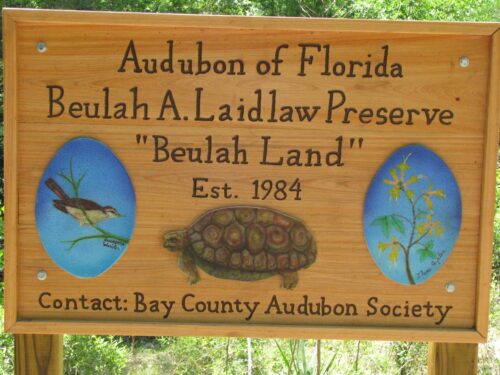
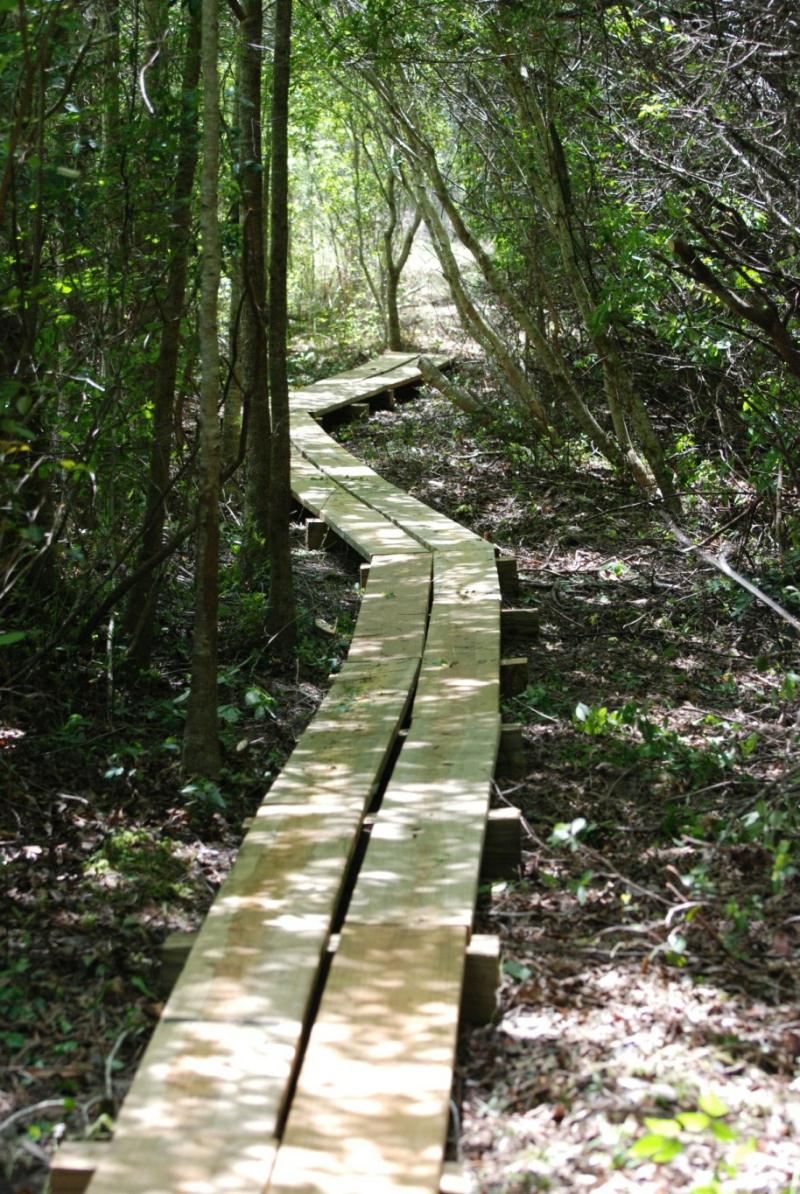
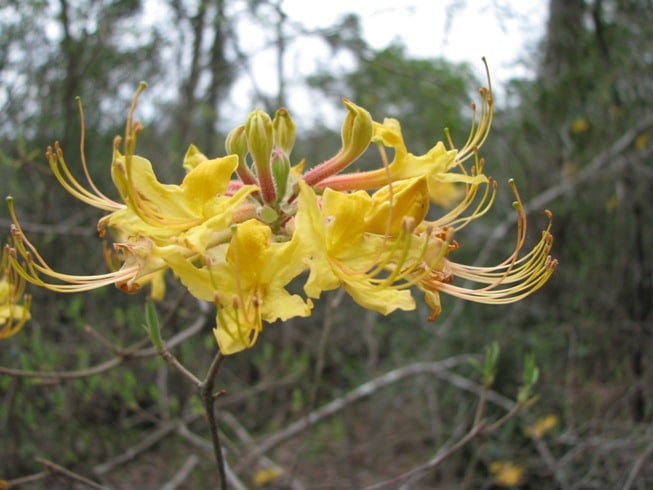
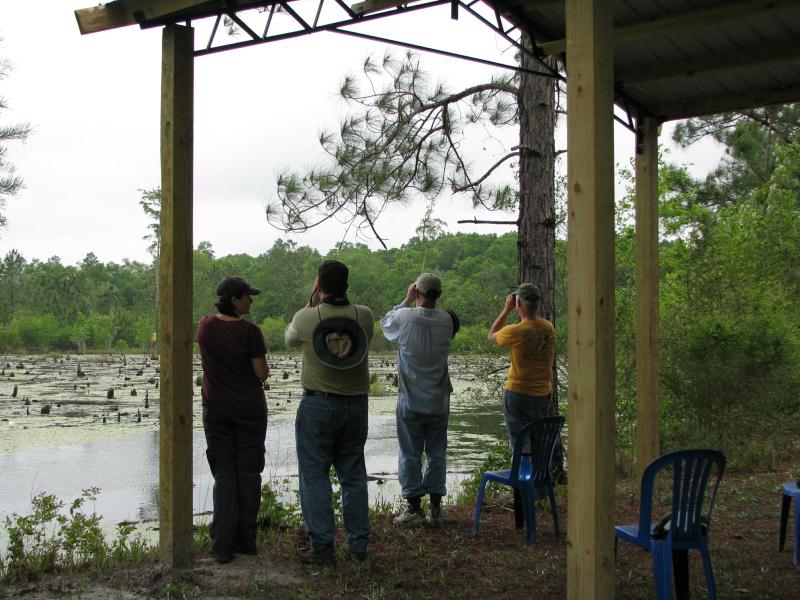
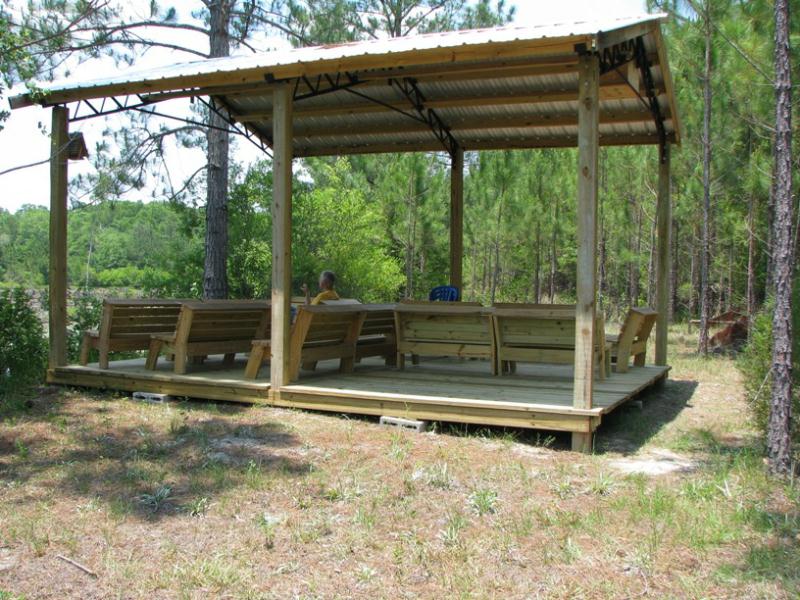
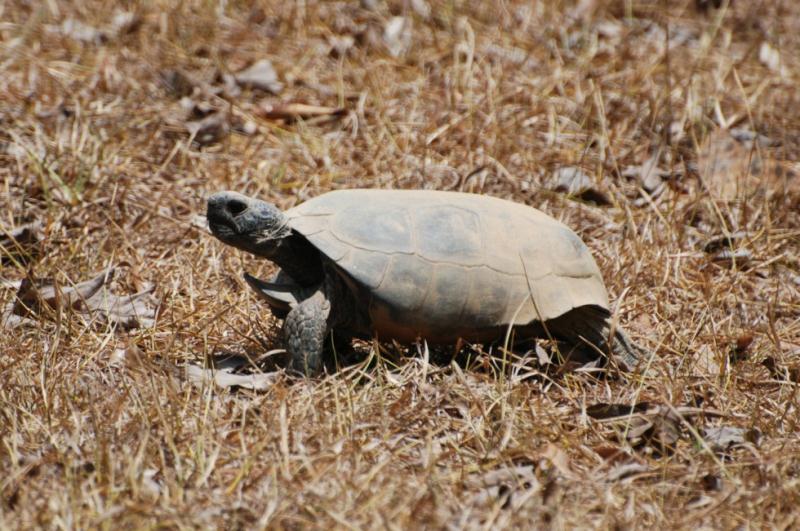
The Beulah A. Laidlaw Preserve is 272 acres of land in Washington County, about four miles north of Vernon and west of State Route 79. The Preserve is owned by Florida Audubon Society has a Memorandum of Agreement to manage and oversee the property. There are complications on access across private lands, so the property is only open to the public or to Audubon’s membership by appointment with one of the keyholders if the gate is locked. Ed Keppner and Neil Lamb wrote an Adaptive Management Plan for the Preserve in June 2009 and have updated the Plan periodically as part of the ongoing work at the Preserve. Neil Lamb is the Preserve Manager with assistance from Phillip Herndon and numerous volunteers. Over the last few years, the Choctawhatchee Audubon Society has ontributed significantly to Preserve maintenance and we greatly appreciate this collaboration. Over the years, we have received various grants for projects such as boardwalks, a pole barn shelter, and other amenities. The management plan is designed to promote wildlife through enhancement of the natural topography of swamp, bog, uplands, and clearings that support a rich and diverse flora and fauna. Three signature species of the Preserve, the Swainson’s warbler, flame azalea, and gopher tortoise, are present in good numbers on the property.
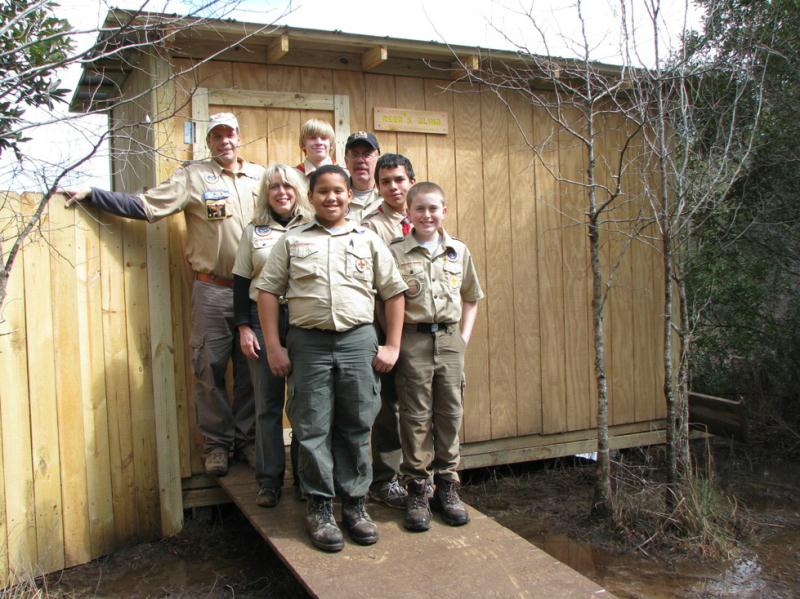
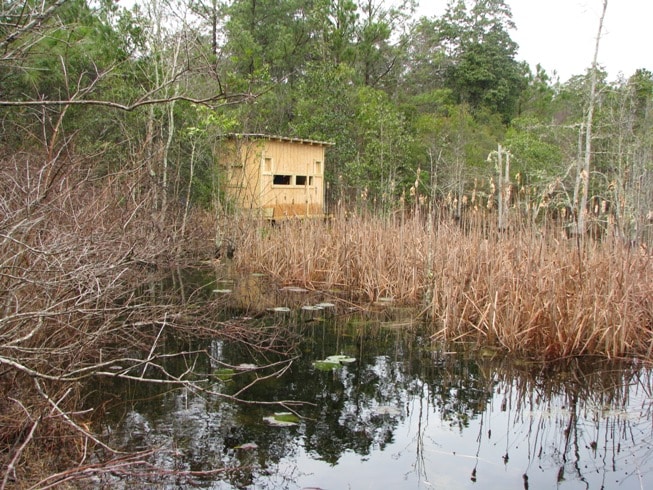
An Eagle Scout Project and another Boy Scout Project by Troop 562 of Santa Rosa Beach, FL provided benches for the shelter and an outstanding photography blind overlooking the central bog and beaver pond. The trails and points of interest are sign-posted and mapped for use. Management strategies include clearing old man-made trails and game trails to allow easier access while at the same time maintaining more of the edge habitat that supports the species richness of the property.
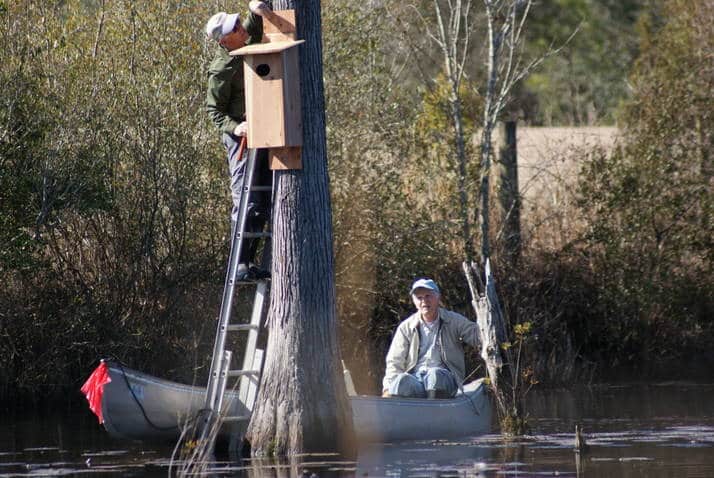
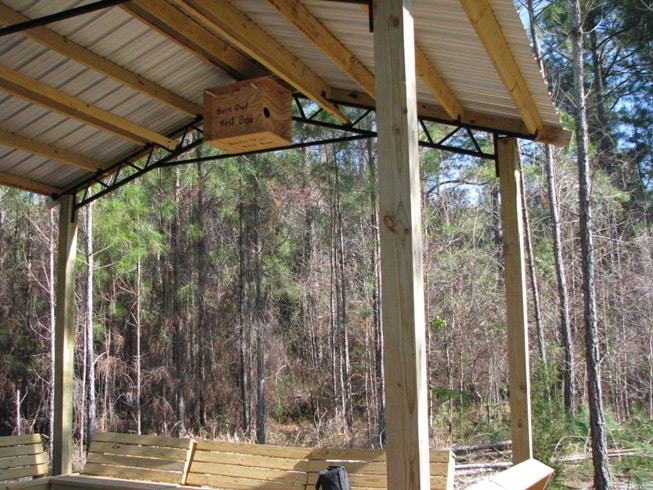
Brush piles created by the clearing are intentionally and strategically located to offer harborage and shelter to many species, especially over-wintering sparrows. Winter mowing of meadows instead of using fire maintains the open areas that are so critical to many species. Purple martin nest boxes, wood duck nest boxes, and Eastern bluebird nest boxes have been installed and are being used. A barn owl nest box is located in the shelter in the hope of attracting a barn owl.
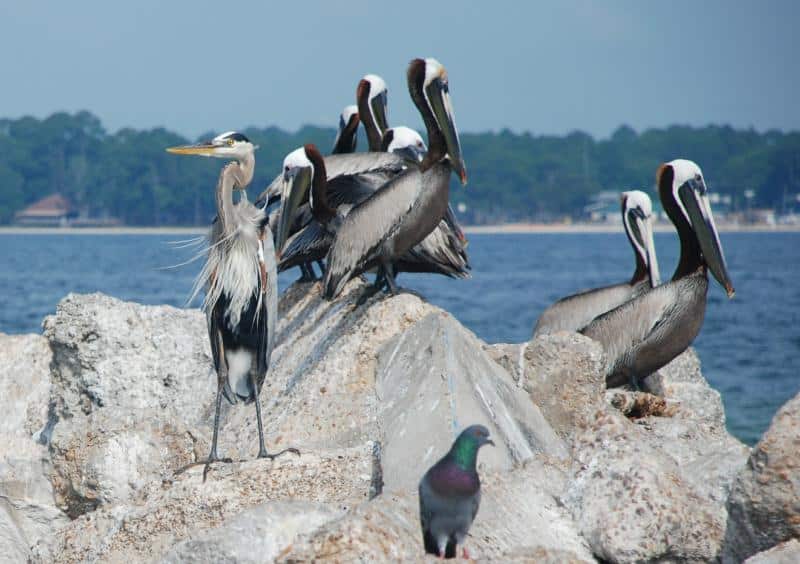
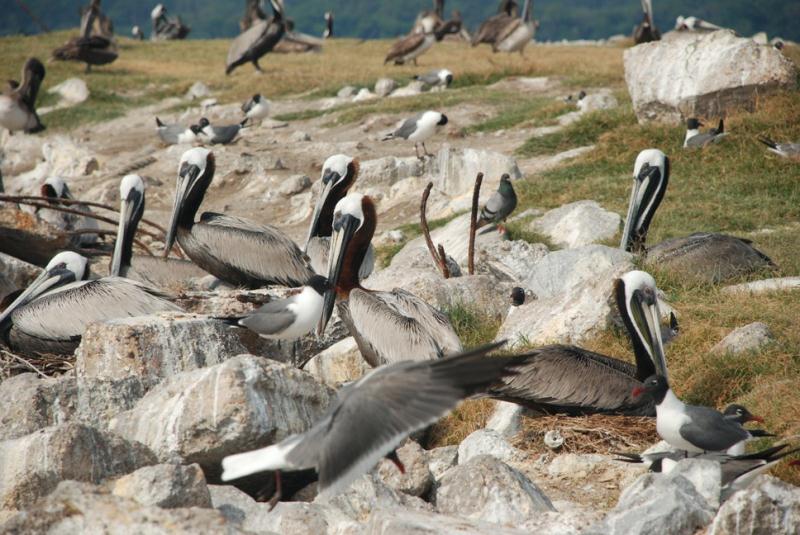
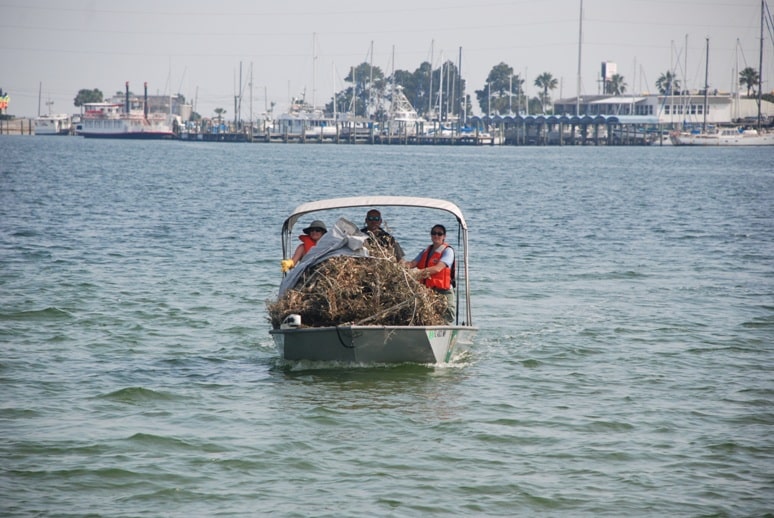
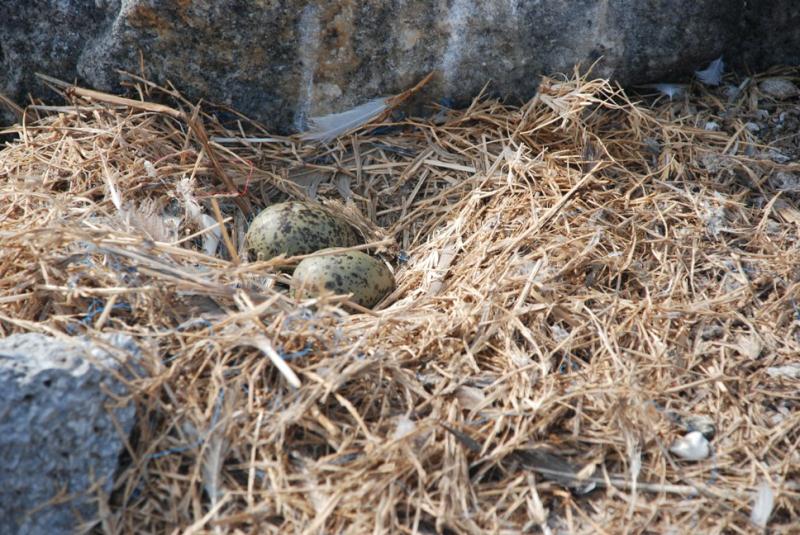
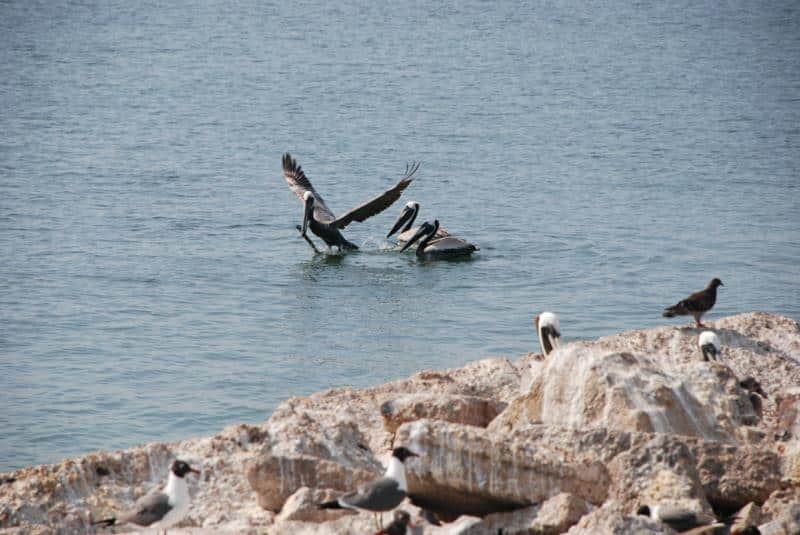
Our chapter has a long history of involvement with this small spoil island next to Port Panama City in St. Andrew Bay. The island is the only nesting place for brown pelicans in Bay County and it is a critical nest location for the entire western Panhandle. Besides the 300+ brown pelicans, several hundred laughing gulls, great blue herons, and a few other species nest on the island. Various storms over the past few years have washed away much of the vegetation on the island, so through the initiative of Dr. John Himes of the FL FWC, some volunteers hauled boatloads of tree branches out to the island for use by the brown pelicans to build nests among the rip-rap and jumbled concrete. The pelicans grabbed the branches even as they were being unloaded.
STAY UP TO DATE ON WHAT'S HAPPENING WITH
THE BAY COUNTY AUDUBON SOCIETY
The 2024-25 season has ended. We are breaking for the summer. The montly birdwalks at Camp Helen will continue through the summer. The Board will be busy planning for our 2025-2026 activities. Check here often for updates.